

Detritus
What I found in our mud pit

As part of ongoing property improvement, a crew tore down three dilapidated low storage barns along our back alley and has rebuilt one taller structure that we will call a garage. I suspect it will be more like a workshop for Clark to create things. I am hoping for a garden sculpture made with some leftover wood from framing. With the old barns hacked apart and carted away, the size of our back garden has practically doubled. I want to plant it up this season, if possible, but what we have right now is a mud pit. Nice, if you’re a bird looking for a drink and a cool-off bath.
Pulling down the old structures revealed a history of the Hudson Valley in miniature. Once upon a million years ago or so, there was a giant glacial lake, and when the water retreated, a river carved its route into the landscape. A few towns over I’ve seen gardens with dark friable soil, but here in Hudson, the earth is dense, orange-toned clay with deposits of small round pebbles, peppered liberally with the detritus of life from before 1920, when the storage barns were built. Clay was a valuable resource that built cities; once there were once brickyards up and down the banks, a huge industry that provided employment for generations of locals and immigrants.
I recently returned from a trip to Italy. We spent a few days in Verona, site of a glorious Roman arena. I learned that following the collapse of the Roman Empire and until it was appreciated afresh during the Renaissance, the arena became something of a convenient dumping ground. Refuse of all sorts, even dead bodies. Many large stone blocks were hauled out of the arena to build other buildings in the city. As my friend and I walked through the space, I marveled at the sophisticated design and the fossils visible in the stones first laid millennia ago, signs of prehistory. The arena survived conquest, looting, trashing, earthquakes, and has now been lovingly restored as the acoustically excellent location of a world-famous opera season. I cannot imagine what it would be like to grow up in a city where you walk by a Roman arena each day on the way to school. Even this magnificence might become prosaic.
Now, I have returned to our mud pit. Every gardener I know in these parts laments the clay-packed riverbed soil—thick and viscous, holds water but no aeration or drainage. Elsewhere in my garden, I’ve excavated piles of small river pebbles to use as rain drains. Worms can’t live in this soil environment, so until I break it up and add compost, the soil doesn’t support plants except for the most adaptable weeds. We have one deep depression that filled in after snow melted, becoming a delightful birdbath come springtime. Perhaps there is a spring way below. If we want anything to grow there, we have work to do. We hired a crew to remove the top layers of clay but there’s still plenty more. Judging from the photos I’ve seen of old brickyards in this area, the clay layers could be tens of feet deep.
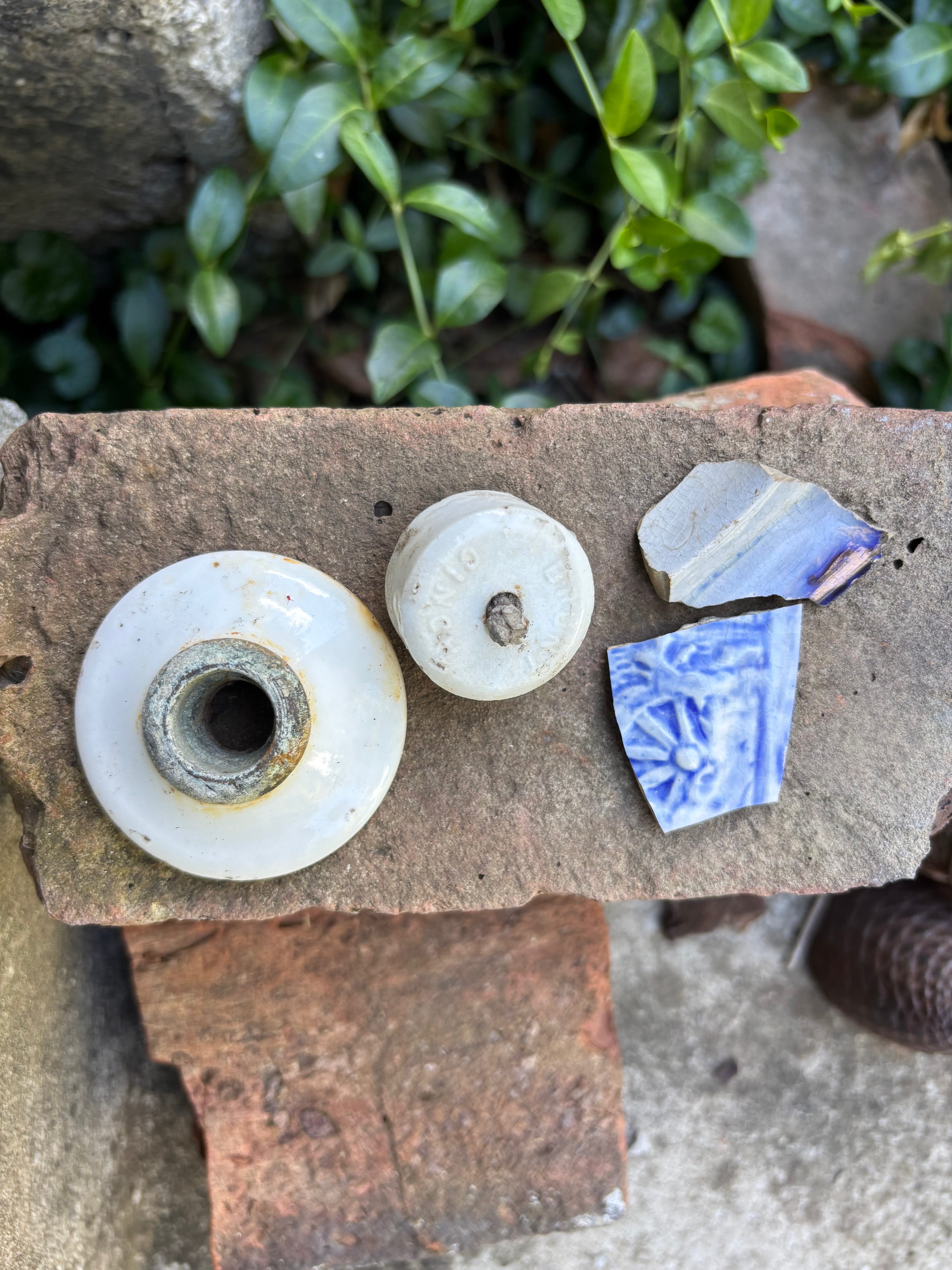
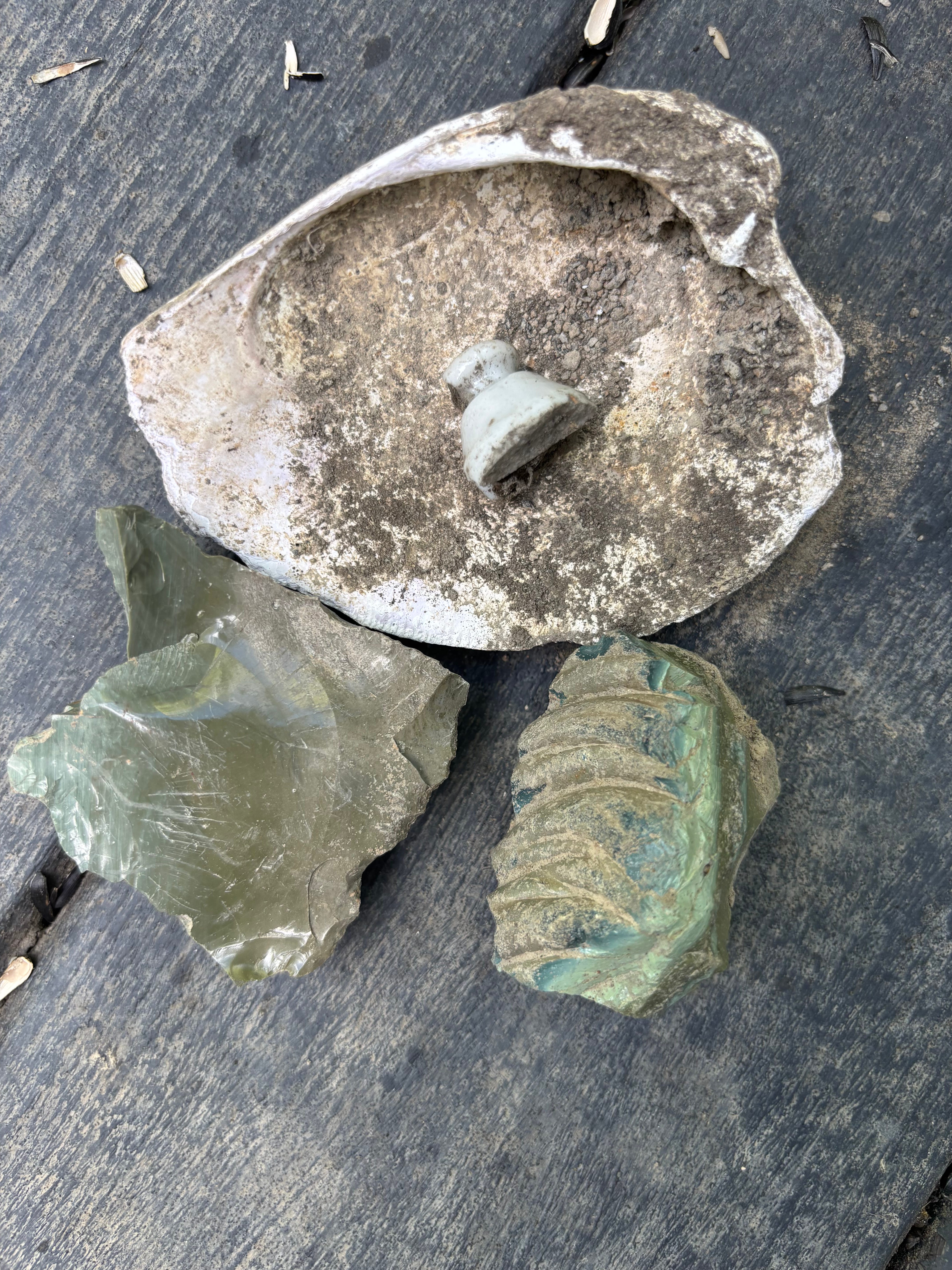
Our house was built around 1875. So, our mud pit is now a history lesson in daily life of the late 19th century. I’ve found intact and broken bricks, bits of blue patterned pottery, white porcelain fittings for ancient wiring and plumbing, glass shards of all colors and sizes from beer bottle brown to softer intriguing iridescent bits that resemble the sea glass I find in Maine. There are chunks of shiny green and black material that looks like molten glass, perhaps the remains of some manufacturing process. I post a photo here in case a reader can identify this material.
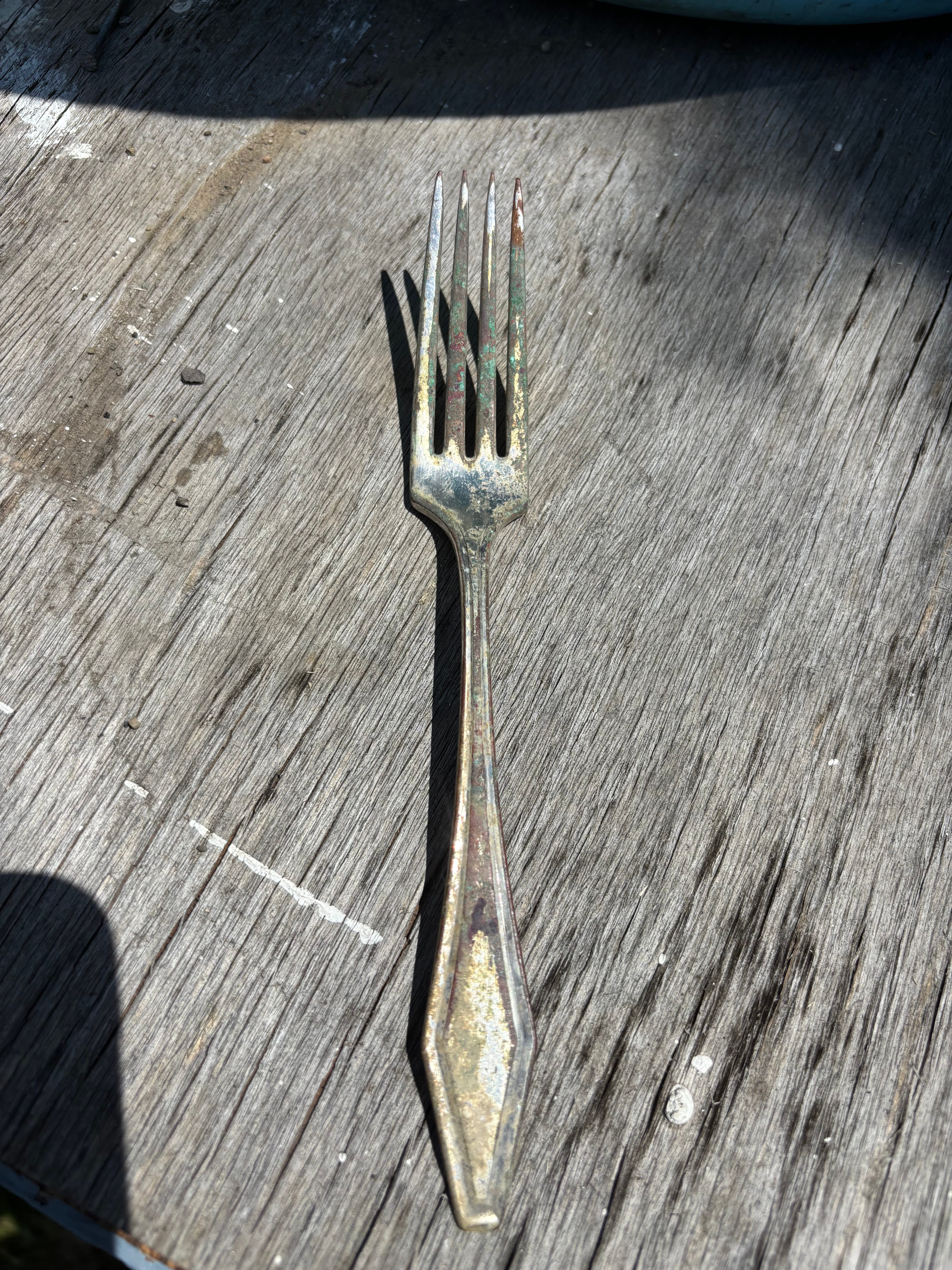
There are large clam and oyster shells. I’ve seen old photos that show shellfish shops on Warren Street, or perhaps the people who once lived in our house raked clams and oysters on their own time. I bring home empty oyster shells from local restaurant adventures to add calcium to our garden. Perhaps previous dwellers did the same or just buried them out back as refuse. Speaking of meals, one of our work crew found a silverplated brass fork, hefty, a pleasant weight in the hand. Maybe the matching knife is buried nearby? You could make short work of a steak with utensils like these.
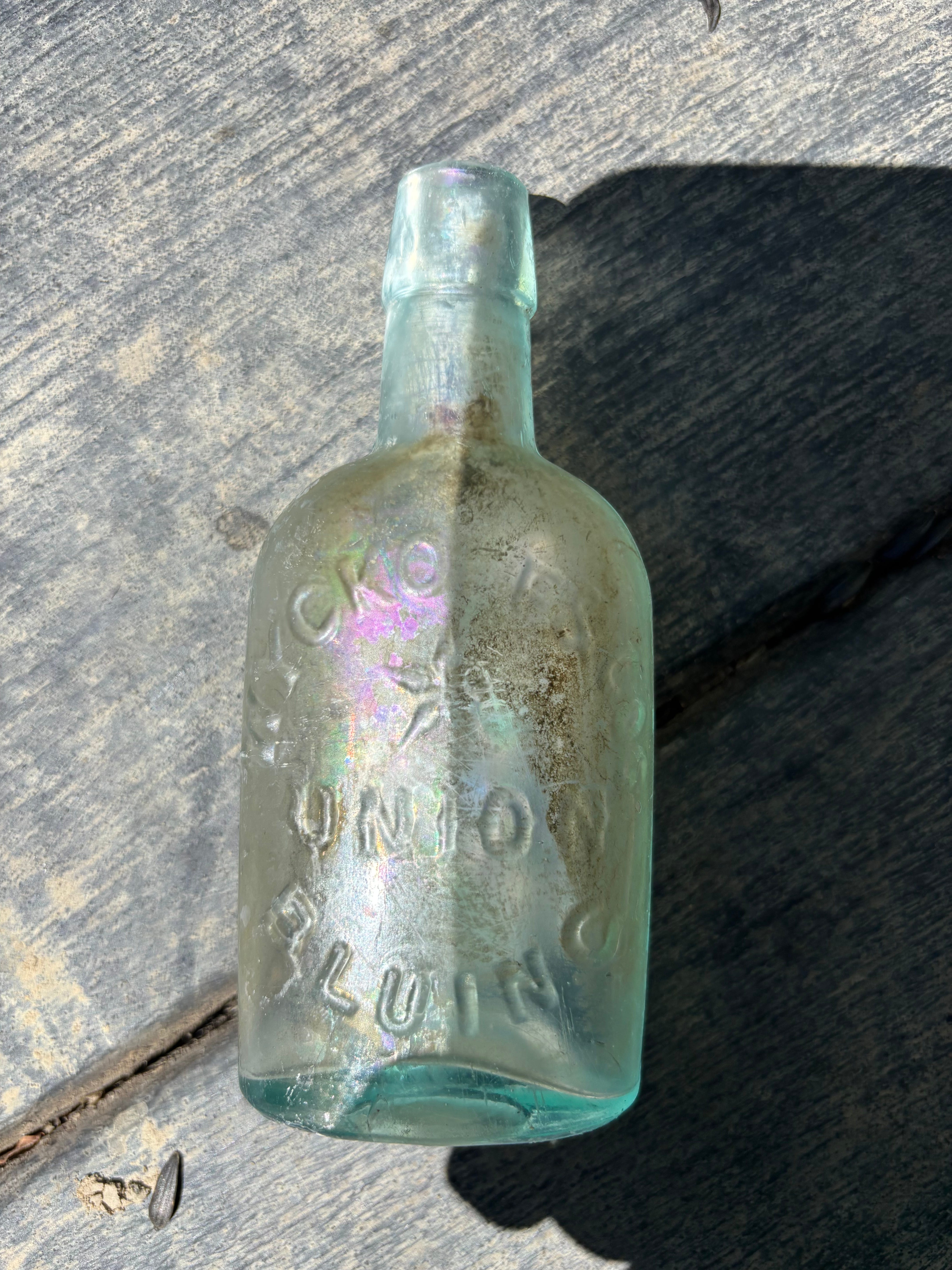
A few days ago, while poking in our mud pit, I found a small and intact pale blue glass bottle stamped “Wyckoff and Co Union Bluing.” The internet tells me that in the 1880s-1890s this New York company manufactured a product designed to whiten clothes and linens. Now—after soaking and scrubbing and a few passes through the dishwasher—the bottle sits on a shelf in our kitchen, a reminder of the many women who cooked and cleaned, raised children, and struggled to brighten their bedsheets and blouses while living on this piece of earth.
THANK YOU for reading and I’d love to hear from you! More posts most Fridays at noon. I hope you’ll subscribe (paid subscriptions help support independent writing on Substack!) and share with other readers. A free and open press has never been more important, especially as we experience life under an administration in Washington that is no friend to writers or readers. I know you all receive many requests, so to encourage you to consider a paid subscription, I am offering an annual rate of $30. Thank you all for reading and thank you for supporting independent writers!
You can find out more about my memoirs Perfection and Eva and Eve here and purchase here.
I work privately with memoir writers. You can reach out via my website: juliemetz.com.
What treasure troves! Your diet sounds much like our Georgia red clay.
Wonderful, you archeologist in the making!